
Grow a beard
The risk in conversations


Last week, Julie and I had a wonderful conversation with someone we are starting to get to know better. It’s our third Google Meet where “Thomas” graciously agreed to chat and get to know us better.
Thomas is a coach who lives on the West Coast of the US. For our part, we live in France with a nine-hour time difference. We met via an informative and fun leadership meeting (ILVW Inclusive Leadership in a Virtual World) where they actively encourage getting to know each other outside of the weekly event. This is exactly what we did with Thomas.
Talking away with him, my little, and sometimes annoying, inner narrative started to somehow focus on his beard of all things. As one does, of course. Ok, it was more like someone who had forgotten to shave for a few weeks and, in his case, had become soft to the touch. We discovered later that his wife, apparently, loves it.
But before we got to that point, what was going through my head was the color of his hair in contrast to his beard.
“How come he has jet black hair and yet his beard “Glistens” with a good dose of white in it…….dare I ask him?”
The underlying point of this nanosecond thought was the risk of asking such a question and would Thomas be offended by it? Would he take this the wrong way and our meeting be the third and last? Why would anyone ask such a question anyway?
I hmmmm’d and said to myself “Oh (expletive) it, just ask!”
As the conversation developed, the greater the urge.
“Thomas, forgive me for asking but how come your hair and beard are different colors?” I then drew comparison to myself looking like Mr Fantastic of the Fantastic 4 with my silver fox hair on the sides of my head and shiny bristles (When I have not shaved, that is). Unlike Thomas’s wife, Julie does not like bristles let alone shiny ones.
The risk paid off. Maybe it’s not what I said but how I said it that made the difference. Adding that personal laugh at myself as comparison helped too. But it could have gone all so wrong. I could have read him wrong . If it had, I would have instantly apologized.
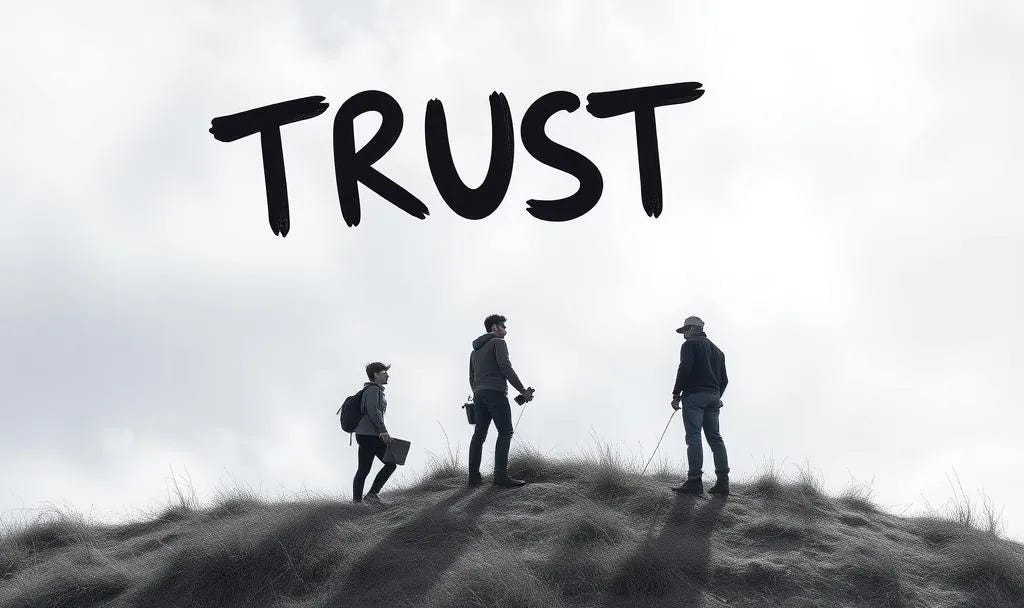
With laughter we built a deeper connection with Thomas and the conversation flowed. Aparently, a client of his said that his beard suited him and that, get this, it made the client trust him more.
Looking at Julie at that point, I got “The look”. This is the look where nothing is said but everything is understood. The subliminal message was, “No, you are not growing a beard”. Maybe I should try to look like Gibbs from NCIS and his cool haircut?
So does growing a beard build trust? Have you got a beard, and how has that worked for you?
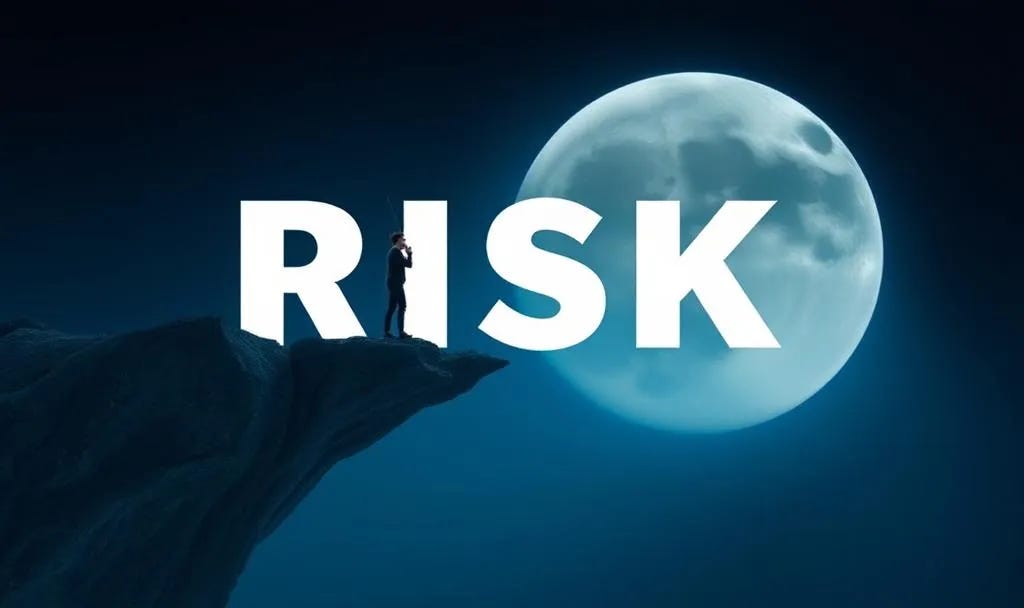
But this post is not about trust, it’s all about the risks we take when we talk with people, especially to those we have just met or have recently started to get to know. The example with Thomas went well. I’ve tended to use humour in as many conversations as I can, but always in the context of sensing how the conversation flows.
Call it serendipity, but something happened this week. Every weekday morning, I work out by habit. At silly O’clock in the morning, I go downstairs, deal with the dogs, warm up and start my routine. At the same time, I listen to podcasts .
That morning, it was Adam Grant being interviewed by Steven Bartlett of Diary of a CEO entitled: The Surprising New Research On Procrastination, Perfectionism & Happiness!
About a third of the way through, Adam Grant was talking about child prodigies. He said something that really struck home with me. Giving the example of young children being able to play Motzart etc and their constant practice to perfection, he then said “And practice does make perfect….. but it does not make new”.
How true, I thought to myself. We are all so comfortably numb (Yes, a Pink Floyd track), and practised in how we communicate in our own environments. But in a new environment (Office, Job, Country) the initial tendancy is to keep practising what we’ve always done. Quite natural, I suppose.
It can take a lot of guts and maybe some years of experience from the school of hard knock-downs to get out of this habit. Failure here is not a bad thing as you quickly learn.
So let me tell you a true story where the penny did not drop for me….. twice in a row. It opened up my eyes that I had to change and be flexible within my new environment!
Flashing back to my days in construction, in the UK, I recalled frequent walks around the site in the course of my day, literally swearing at any and all workers but in a tone where it always was reciprocated in kind. On-site back then, profane language was accepted and second nature. No one takes it personally.
Of course when speaking to people in the office, I realized I could not use the same language. The language is professional, cordial and boring (To me that is).
And change we must, or we risk losing our jobs. At the very least, to resist and temper ourselves respecting the different environment especially when one first starts at a company. From personal experience, it takes about six months to become reasonably conversant and aware of any new environment. It takes longer to be able to navigate different people and personalities in conversations where you and they are heard.

The story starts with a change of country, from the UK to the US. A change of location and better still a country is one of the best things we can do to open our minds and widen our experience. But this is no ordinary story because it’s one where the risks failed miserably……near to fatal!
There’s a thing about cultures, namely that they are different. “Duh”, you say. But back then I had my head was pretty swollen with an ego.
I was annoyed at one of the contractors for something. I cannot remember exactly what for, as that escapes me for the moment at least. Meeting on-site, I applied what worked for me in the UK, namely explaining a faux-par, flavoured with some interesting descriptive language. I admit that I left out humour.
This meeting was with the main contractor on-site. Imagine, a shiny new pick-up (Mine, of course) facing a rugged work pick-up with a gun rack (His). I unkindly “explained” the situation using my default and descriptive language from my past. No thought was given to whom I was talking with; a person from a different country.
Have you moved to another country or state and found yourself having to adapt your conversations. How did you cope?
I’ll never forget how calm this person was. I should have sensed something but, as habits have a tendency to do, they just deliver on auto-pilot.
Having listened patiently, he softly said “I’m going over to my truck to get my gun and, if you are still around, I’ll shoot you”. He meant it.
Me and my big mouth. Oops!
That’s when the reptilian part of our brain starts to work in our favour. ”Get the F…. out,” it said. I did; post-haste! Funny though, how we never met again.
A few months later, checking that this event might have just been a one-off, I did something similar with the driver of a large earth-moving machine and came close to having my lights punched out. I would have deserved it but a genuine apology and admission that I was wrong prevented this. Phew!
At the time, my ignorance blamed them for not being able to take a right royal kick up the rear end when they did something I thought was not up to standard. I oftentimes feel we go through stages where we blame everyone else except ourselves especially in leadership positions.
A time-honoured adage that originates from carpentry and woodworking is “Measure twice and cut once”. Whilst easy to say, in practice we often pay lip service to this, especially at times when our emotions and ego kick in. Think and think again before you actually speak is the lesson I learned.
Every conversation has risks associated with it. The risk of saying something you regret, perhaps in the wrong tone. Then there's the risk of not saying what needs to be said. Every context gives us tremendous experience and when we move jobs, offices, and locations, consider adapting conversations.
Listen to the Digested Version of this post ( coming later this week)to find out the
story behind the story and why risk matters.
Please share your stories in the comments. If you had to repeat history, what would you do differently and why? What communication risk paid off? What failed?
Although your story draws me and, I look forward to hearing how it ends... I will refrain from growing a beard (for obvious reasons!) ;-)